
Seeded Randomness in Management Games: Same Dice, Fair Rolls
by Bouse-Town Team8 min read
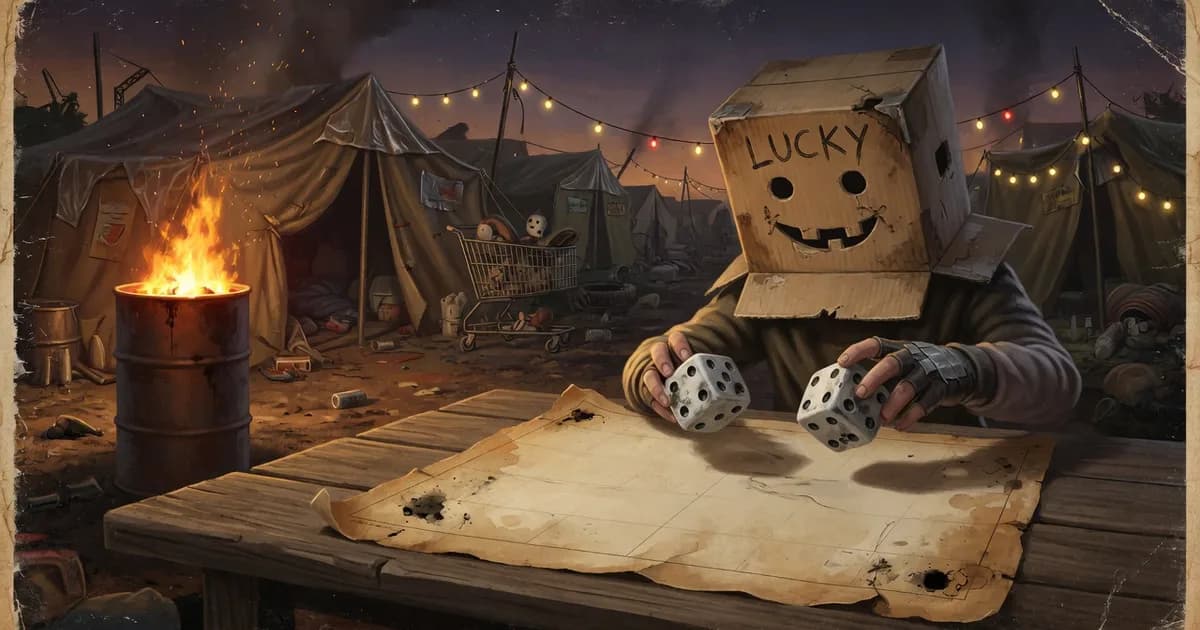
A random seed is the starting number a game feeds its random generator, and two runs that start from the same seed and make the same choices roll the same results. Bouse-Town uses seeded random streams so the same saved state resolves consistently, and this dispatch explains what that sentence means, why it is a design decision rather than a technical footnote, and what it changes for you when an expedition goes wrong.
Town dispatch, filed from behind the barrel fire.
What a seed actually is
Computers do not roll dice. A game's "random" numbers come from a pseudorandom generator: a formula that takes a starting value, the seed, and produces a long sequence of numbers that looks random but is completely determined by that starting value. Feed the formula the same seed and it hands back the same sequence, every time, on every machine. The Wikipedia entry on random seeds covers the mechanics if you want the formal version.
Players mostly meet seeds through world generation. Minecraft is the famous case: type a seed into the world-creation screen and you get a specific, shareable world, byte for byte, as documented on the Minecraft seed page. Roguelike communities run daily-seed challenges on the same principle: everyone plays the same dungeon, so the only variable left is the player.
Management games use seeds for something quieter and, honestly, more important: making outcomes consistent with the state you saved.
The problem: randomness that shifts under reload
Picture a management game without seeded state. You save. An expedition sits unresolved. You close the game, reopen it, and the resolution rolls fresh numbers, so the same crew on the same run now comes home with different loot, or does not come home. Nothing in the fiction changed; the dice simply got rerolled behind the curtain.
That design has two failure modes. The first is save-scumming: reload until the dice cooperate, which turns a decision game into a slot machine with extra steps. The second is worse, because it runs in the other direction: a player who made a good decision can watch a reload quietly turn it into a bad outcome that never should have existed. Either way, the link between your choice and its consequence snaps, and choice-consequence is the entire currency a management game trades in.
Seeded state closes the loophole in both directions. When the pending outcome is already determined by the saved state, reloading changes nothing. The roll happened, in effect, when you committed to the decision. What is left to master is the decision itself.
Why streams, plural
One seed driving one generator has a subtle flaw: every system in the game pulls numbers from the same queue. Trigger one extra event, anywhere, and every roll after it shifts, because each system's draw depends on how many draws every other system made before it. Sneeze in the housing ledger and the expedition loot changes.
The fix is to split randomness into independent streams: one seeded stream per system, each advancing on its own schedule. Expedition resolution draws from the expedition stream, event selection from the event stream, and neither can nudge the other. This is a standard technique in simulation programming, the same reason scientific simulations assign separate generator streams to separate subsystems: results stay reproducible even when the subsystems fire in a different order.
Bouse-Town triggers choice-driven satirical events after expeditions, and the two systems roll from separate streams. The event that lands after your crew returns was never entangled with the loot they carried; each outcome is exactly as determined, and exactly as isolated, as it should be.
What this changes for you at the camp
Bouse-Town lets the player build and upgrade a camp, and the construction ladder is fully deterministic: costs are costs. The randomness lives in the expeditions and in the events that follow them, and seeded streams change how you should think about both.
First, reloading is not a strategy. A saved state resolves consistently, so the run you regret stays regretted. The expedition guide ranks all seven runs by exactly that regret, and the ranking is honest precisely because no reload can un-earn it.
Second, risk reading becomes a real skill. When outcomes cannot be rerolled, comparing timers, base risk, and heat before committing a crew is the whole game. The strategy guide leans on this: every recommendation in it assumes the dice you see are the dice you get.
Third, shared stories line up. When two players describe the same choice producing the same absurd event, that is the streams doing their job. The satire lands harder when the game demonstrably is not improvising the punchline for your benefit.
The design bet underneath
There is a real trade here, and it is worth stating instead of hiding. Unseeded randomness gives players a safety valve: hate the outcome, reroll it. Seeded randomness takes the valve away and offers something slower in return, outcomes you can trust enough to learn from. A management game about consequences, and Bouse-Town is nothing else, has to pick the second option or admit its consequences are negotiable.
Bouse-Town is a satirical camp-management game built for the web and iOS, still in development, and the seeded-streams decision is one of the earliest ones in the codebase. The camp changes, the buildings ladder changes, the events multiply. The dice stay honest. Discover Bouse-Town to see the current state of the town.
Frequently asked questions
Does a seed mean every run of the game is identical?
No. The seed pins down the randomness, not your choices. Two runs from the same starting state diverge the moment you pick a different crew, structure, or answer to an event, because each choice changes which rolls the streams are asked to make. Determinism means your run replays consistently; it does not mean everyone plays the same run.
Is seeded randomness the same thing as no randomness?
Also no. The rolls are still generated from statistically random-looking sequences; you cannot predict an expedition outcome from the outside, and neither can we without executing the same resolution. What the seed removes is variance between the save and the resolution. Uncertain going in, consistent coming back.
Can I see or set the seed in Bouse-Town?
Not currently. Player-facing seeds are great for world-generation games where sharing a seed shares a map. In a camp-management game the seed's job is internal consistency, and exposing it would mostly invite the reroll behavior the design exists to prevent. If a daily-seed challenge ever makes sense for the town, the dispatch will announce it.